Part 1: Are We Living Our Dream Job?
Between Dreams and Paychecks Series
What the Data Says About Career Satisfaction Today
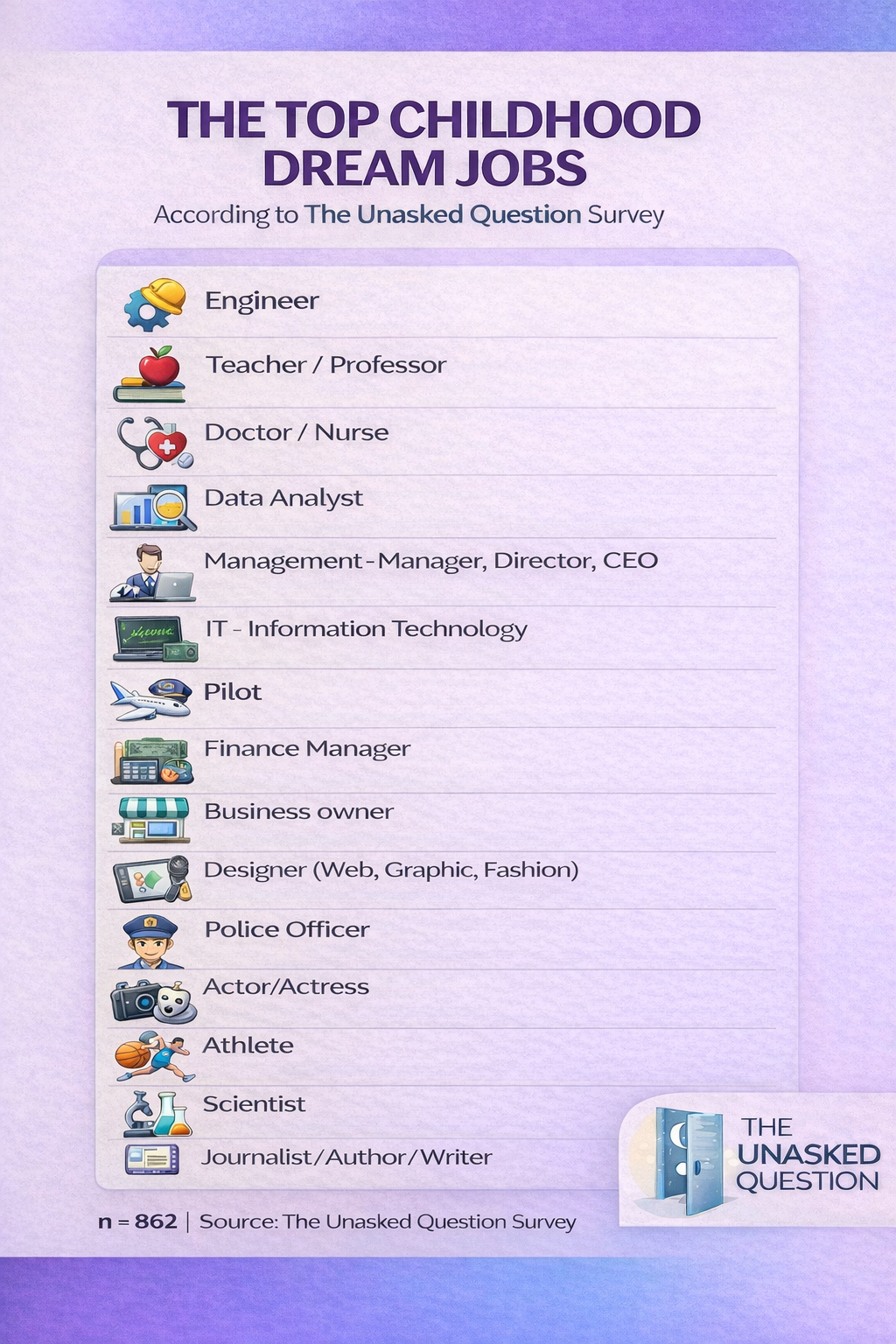
By the time most people reach adulthood, they have answered the same question dozens of times.
What do you want to be when you grow up?
As children, the answers come easily. Doctor. Teacher. Athlete. Designer. CEO. Writer. Pilot.
We imagine futures that feel both meaningful and possible.
Then life happens.
Education takes longer than expected. Opportunities narrow. Bills arrive. Families grow. Health changes. Markets shift. Priorities evolve.
And slowly, almost imperceptibly, the original dream is revised.
So we decided to ask a different question:
Did any of it actually happen?
The Question We Rarely Ask
We talk a lot about “following your passion.”
We celebrate success stories.
We share highlight reels.
But we rarely talk about what happens to our early dreams once real life shows up.
Bills.
Opportunities.
Timing.
Family.
Health.
Luck.
So we asked hundreds of people:
How closely does your current work align with what you dreamed of doing as a child?
And then we asked something just as important:
How satisfied are you now?
What We Expected (and What We Found)
Going in, we assumed one of two things would be true:
Either…
Most people missed their dream jobs and felt disappointed
orOnly people who “made it” were happy
That’s not what we found.
Instead, the data told a quieter, more hopeful story.
Most people aren’t living their exact childhood dream.
But most people are still doing pretty well.
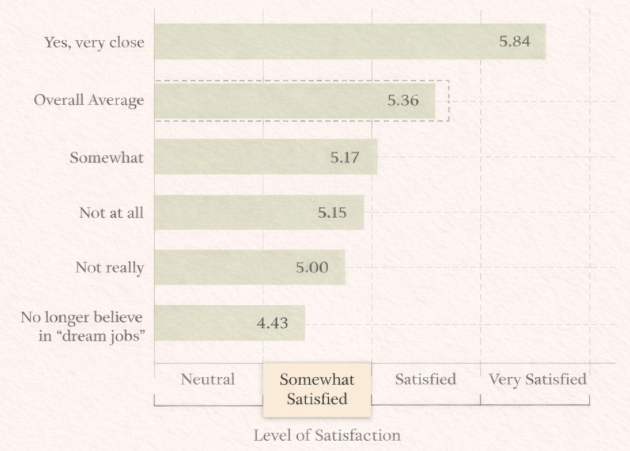
Childhood Career Alignment vs Level of Current Career Satisfaction
The Surprising Pattern
Across the survey, satisfaction stayed consistently strong—even for people who didn’t end up where they once imagined.
On a 1–7 scale:
Those very close to their dream: highest satisfaction
Those somewhat aligned: still high
Those not aligned at all: still above neutral
Even those who no longer believe in “dream jobs”: not unhappy
In other words:
Missing your original dream does not mean missing out on a good life.
That matters.
Dreams Don’t Disappear. They Evolve.
Many respondents didn’t “abandon” their dreams.
They reshaped them.
A future doctor became a healthcare administrator.
An aspiring athlete became a coach.
A would-be writer became a communicator.
A designer became a product manager.
The label changed.
The core interest stayed.
This isn’t failure.
It’s adaptation.
Some Dreams Have Easier Paths
When we grouped childhood dreams by field, another pattern emerged.
Careers with clear pipelines—like engineering, education, and healthcare—showed higher alignment.
Careers that depend on visibility, luck, or gatekeepers—like sports, media, and the arts—were harder to sustain.
That’s not about effort.
It’s about structure.
Some dreams come with roadmaps.
Others come with obstacles.
Recognizing that matters.
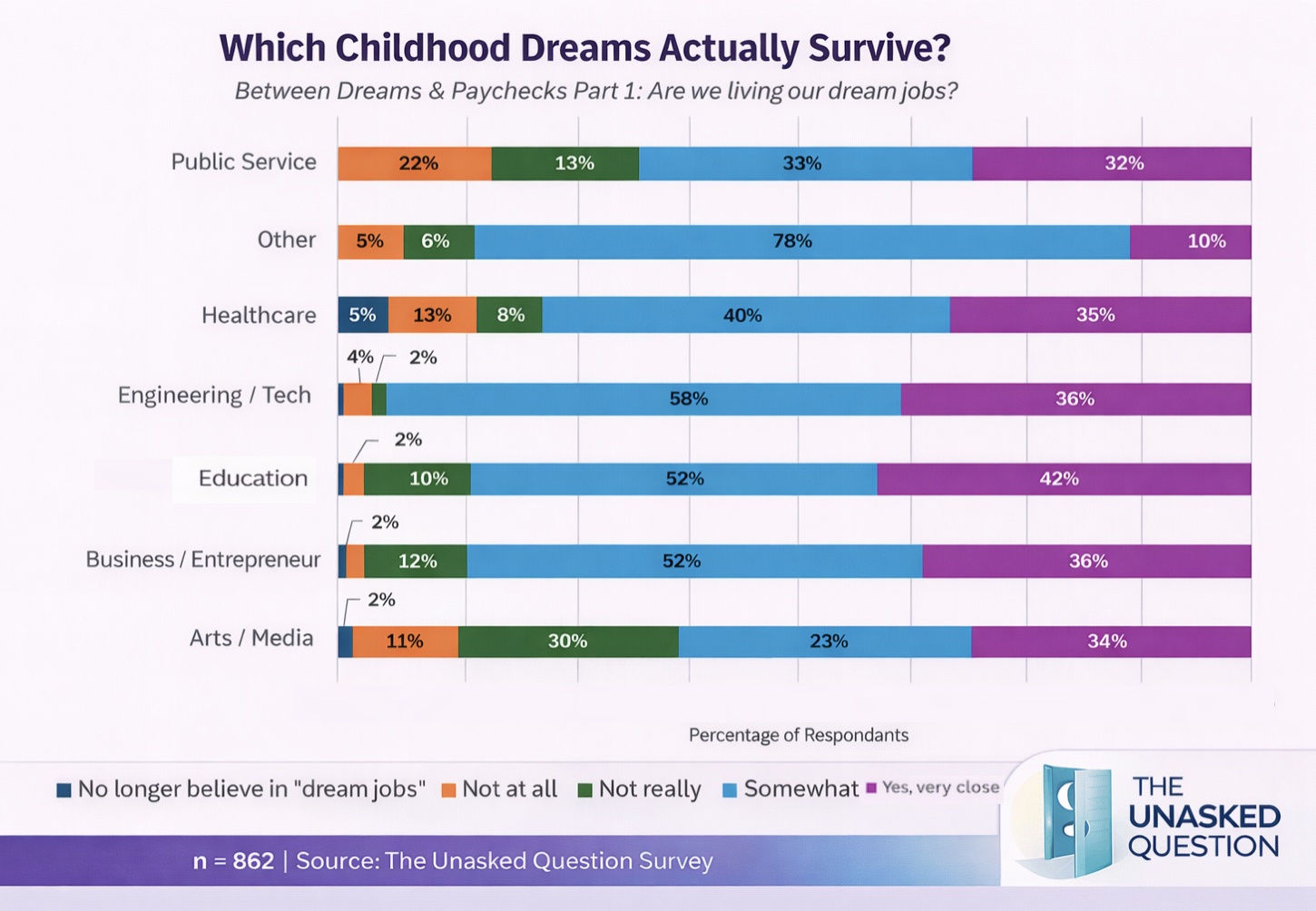
Survey results showing which childhood dream careers people actually end up pursuing in adulthood, broken down by industry.
The Bigger Story
Taken together, the data suggests something powerful:
Most people don’t “give up.”
They recalibrate.
They find versions of success that fit real life.
They trade fantasy for stability.
Idealism for sustainability.
Certainty for flexibility.
And many of them end up satisfied anyway.
That’s resilience.
Why This Matters
We often tell young people:
“Just follow your dream.”
But we don’t talk enough about:
How dreams change
How systems shape outcomes
How fulfillment looks different over time
Understanding this helps us:
Be kinder to ourselves
Be more realistic with others
Make better career decisions
What’s Coming Next
In the next installment, we examine a central force behind nearly every career decision:
Money.
What would people do if financial pressure disappeared?
Who feels trapped—and who doesn’t?
How much does income actually shape identity?
The answers complicate everything.
One Last Question
So here’s the unasked question behind this series:
If most people don’t become what they dreamed of…
Why are so many still okay?
We’ll keep digging.
📊 Follow The Unasked Question to see what comes next.